
Friesian vs Morgan Horse: A complete breed comparison
So which one is actually the better fit for you?
In this head-to-head comparison, we'll break down everything you need to know about the Friesian and the Morgan, from temperament and daily care to health risks and total ownership costs. Whether you're a first-time buyer or simply trying to figure out which breed matches your goals, this guide will help you make a smart, confident decision.
A Quick Introduction to Each Breed
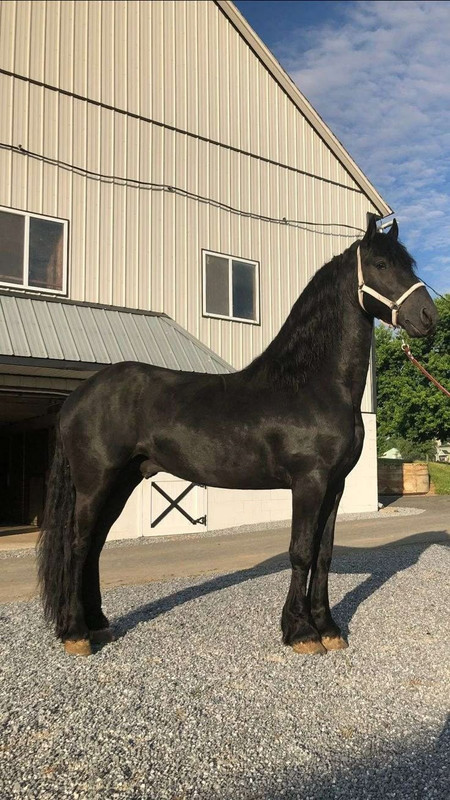
-The Friesian Horse The Friesian is one of the oldest horse breeds in Europe, originating from Friesland in the Netherlands. For centuries these powerful black horses carried medieval knights, pulled royal carriages, and dazzled crowds across Europe. Today, they're one of the most recognizable breeds in the world, almost always jet black, with a flowing mane and tail, feathered lower legs, and a commanding, theatrical presence.
In North America, the breed is governed by the Friesian Horse Association of North America (FHANA), which upholds the strict standards of the original Dutch registry, the KFPS. Friesians typically stand 15.2 to 16 hands and weigh around 1,300 pounds.
-The Morgan Horse The Morgan holds the distinction of being one of the first horse breeds developed in the United States. Its entire foundation traces back to a single stallion named Figure, foaled in 1789 in Vermont and owned by Justin Morgan. From that one remarkable horse, an entire breed was born, compact, athletic, versatile, and famously willing.
Today, Morgan horses are governed by the American Morgan Horse Association (AMHA) and are used for everything from pleasure riding and trail work to dressage, driving, ranch work, police work, and therapeutic riding programs. They typically stand 14.1 to 15.2 hands and weigh around 900 to 1,100 pounds.
Temperament: How Do They Compare?
-Friesian Temperament Friesians are widely known for being gentle, willing, and deeply people-oriented. They tend to be calm without being dull, steady without being lazy, and they genuinely enjoy working with their riders. Many owners describe their Friesians as almost dog-like, they follow you around the barn, nuzzle you for attention, and seem to thrive on human connection.
They're intelligent horses that learn quickly, which is wonderful for training but also means a bored or under-stimulated Friesian can develop bad habits. They're not typically spooky, which is a major plus for less experienced riders.
-Morgan Temperament Morgans are often described as intelligent, alert, loyal, and eager to please. They have a fantastic work ethic and a natural curiosity that makes them fun and engaging to work with. They bond closely with their people and are known for being reliable and cooperative across a huge range of disciplines.
That said, Morgans can be sensitive. They respond beautifully to thoughtful, consistent handling, but a Morgan that's been inconsistently trained, is in pain, or has too much pent-up energy can become pushy or anxious. The breed's intelligence is a double-edged sword: they're quick to learn good habits and equally quick to learn bad ones.
The Verdict on Temperament
Both breeds are beginner-friendly in the right circumstances, but in different ways. The Friesian tends to be naturally calmer and more laid-back. The Morgan is more energetic and mentally sharp. For a very new rider looking for a steady, forgiving mount, a well-trained mature Friesian may have a slight edge. For someone who wants an engaged, responsive partner and has good support around them, a Morgan is hard to beat.
Size and Build: Does It Matter?
It might more than you think. The Friesian is a significantly larger, more powerful horse. At up to 1,300 pounds and 16 hands, they require confident ground handling and appropriate tack. Their sheer size means mistakes have bigger consequences, a Friesian accidentally stepping on your foot is a very different experience than a Morgan doing the same.
The Morgan is a more compact horse, typically 900 to 1,100 pounds and topping out around 15.2 hands. Many riders, especially shorter riders or those coming from a smaller horse background, find the Morgan's size more approachable and manageable, particularly in the early stages of ownership.
If you're petite, newer to horses, or simply want a horse that feels less imposing, the Morgan's size is a genuine advantage.
Appearance: Black Beauty vs All-American Athlete
Let's be honest, this matters to most horse lovers, even if we don't always say it out loud.
Friesians are breathtaking in a theatrical, cinematic way. That jet-black coat, that thick arched neck, those feathered legs moving in high, elevated strides, they look like they belong in a fantasy film. Black is the only officially recognized coat color in purebred registered Friesians (a small white star on the forehead is occasionally permitted, but no other markings).
Morgans are beautiful in a more classic, athletic sense. They have a strong, cresty neck, expressive eyes, and a compact but powerful build. Where Friesians wow you with drama, Morgans impress you with presence and personality. They come in a wide range of colors, bay, chestnut, black, brown, grey, palomino, and more, giving you far more variety in coat color when making your choice.
If striking visual impact is high on your list, the Friesian wins that round. If you want more color options and a look that's more versatile, the Morgan delivers.
Disciplines: What Can Each Breed Do?
-Friesian Dressage (their most popular discipline, natural elevation and collection make them well-suited) Driving and harness work (deeply rooted in their carriage horse heritage) Pleasure and trail riding Western riding (less common but absolutely done) Film, exhibitions, and parades (those looks don't go to waste) -Morgan Trail riding and endurance Dressage Driving Jumping Ranch work and reining Therapeutic riding programs Police work Western and English pleasure Lessons and youth programs The Morgan wins decisively on versatility. Few breeds in the world are genuinely competitive across as many disciplines as the Morgan. If you're not sure yet what direction your riding will go, a Morgan gives you the most options. The Friesian is extraordinary at what it does, especially dressage and driving, but its range is narrower.
Grooming: How Much Time Will You Spend?
Friesian Grooming
Plan on more time and effort than with most breeds. The Friesian's long, thick mane and tail need regular detangling and conditioning. Their feathered lower legs need consistent cleaning and drying to prevent pastern dermatitis (mud fever), especially in wet or muddy conditions. This isn't optional maintenance; it's a genuine health requirement.
For many Friesian owners, the grooming routine becomes one of the most enjoyable parts of horse ownership. But if you're short on time or not yet experienced with horse care, this extra commitment is worth factoring in.
Morgan Grooming
Morgans have standard horse grooming needs, regular brushing, hoof picking, mane and tail care, and seasonal coat maintenance. Nothing unusual, nothing particularly demanding. A basic grooming kit and a consistent weekly routine will keep your Morgan looking great.
Winner: Morgan, by a clear margin. Standard grooming vs. a daily feathering management routine is a meaningful difference, especially for newer owners.
Cost: What Will You Actually Spend? Purchase Price Breed Typical Purchase Price Range Friesian (registered purebred) $10,000 – $50,000+ Morgan (pleasure/trail) $3,000 – $12,000 Morgan (show/performance) $12,000 – $30,000+ The Morgan is significantly more accessible from a purchase standpoint. A well-trained, suitable Morgan for a beginner can often be found in the $4,000–$8,000 range. A comparable Friesian will typically cost at least $15,000–$25,000 for a well-trained adult.
Which Breed Is Better for Beginners?
This is the question most people are really asking, so let's be direct.
Both can work for the right beginner, but they're not equally accessible.
The Friesian is gentler and calmer by nature, which helps new riders feel safe and confident. But the higher cost, more demanding grooming needs, more serious health risks, and the sheer physical size of the horse raise the bar of what "ready for a Friesian" actually looks like. A beginner with a strong support system, a generous budget, access to a good trainer, and genuine commitment to a serious care routine can absolutely thrive with the right Friesian. The key word is right, always choose a well-trained, mature horse.
The Morgan is arguably the more accessible beginner horse overall. Lower purchase price, simpler grooming, more versatile disciplines, and a generally more straightforward health profile mean a newer owner can focus on building their riding skills and horse relationship without being overwhelmed by breed-specific demands. Morgans are also used extensively in lesson programs and therapeutic riding, which is a genuine testament to how forgiving and adaptable they are.
Frequently Asked Questions
In Conclusion
Our recommendation: If budget is a serious consideration, go Morgan. If you're drawn to the Friesian's look and are fully committed to the care requirements and cost, go Friesian, but with a good trainer beside you and a thorough pre-purchase vet exam. If you want maximum versatility in disciplines as you develop as a rider, go Morgan. If dressage or driving is your primary passion and you have the resources, the Friesian is extraordinary at both.